Singapore’s top chefs predict the fine dining trends of 2022: From fusion to local veggies
Advertisement
Experiences
Singapore's top chefs predict the fine dining trends of 2022: From fusion to local veggies
With soaring costs and a pandemic still raging on, restaurant chefs share what's literally on the tabular array this year for the dining scene. Hint: A lot of it is in our ain backyard.
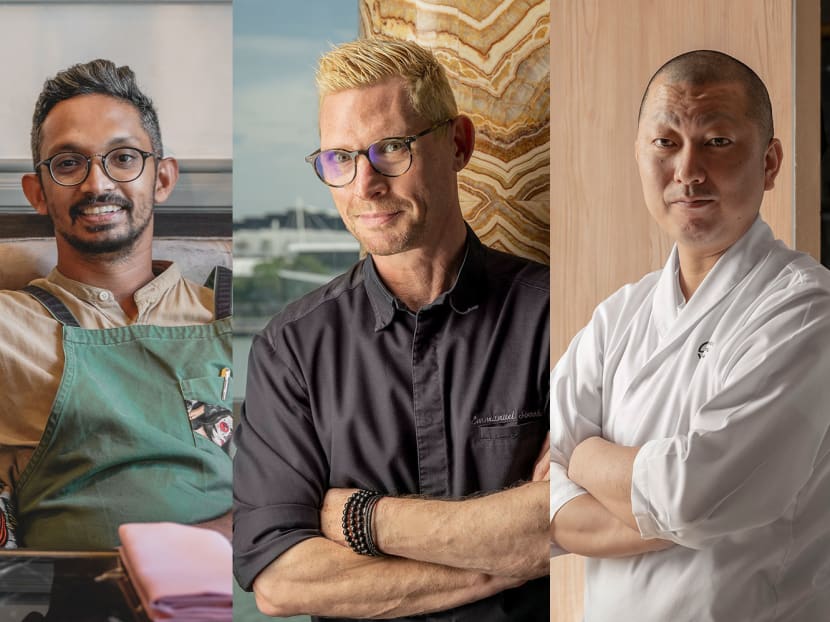
Tiptop chefs Rishi Naleendra, Emmanuel Stroobant, Kazumine Nishida and more share what'southward in store for the local dining scene in 2022. (Photos: Rishi Naleendra, Emmanuel Stroobant, Kazumine Nishida)
21 Jan 2022 06:33AM (Updated: 21 Jan 2022 06:33AM)
Two years (and counting) of the pandemic has certainly led u.s.a. to be more selective virtually our dining choices. And as 2022 rolls in, foodies are anticipating what trends the new year's day brings – will it exist more of the aforementioned or should we look new experiences?
CNA Luxury reached out to some of Singapore'southward finest chefs to become their take – from adapting to the many challenges to new approaches and discoveries in the local fine dining scene.
FROM 'LESS IS MORE' TO STAYING Authentic
While the familiar and homely accept gained traction, rare and unusual ingredients will still depict people to seek unique experiences where they can in Singapore, as everyone'southward wanderlust wings remain clipped by the uncertainties of travel.
"I believe that people are going to err on the side of caution and choose to non travel only still splurge on pampering themselves. Wellness is also high on the list. Hence, I call back it is going to be quality versus quantity. Less is definitely more," noted 2 Michelin-starred Saint Pierre's chef-owner Emmanuel Stroobant.
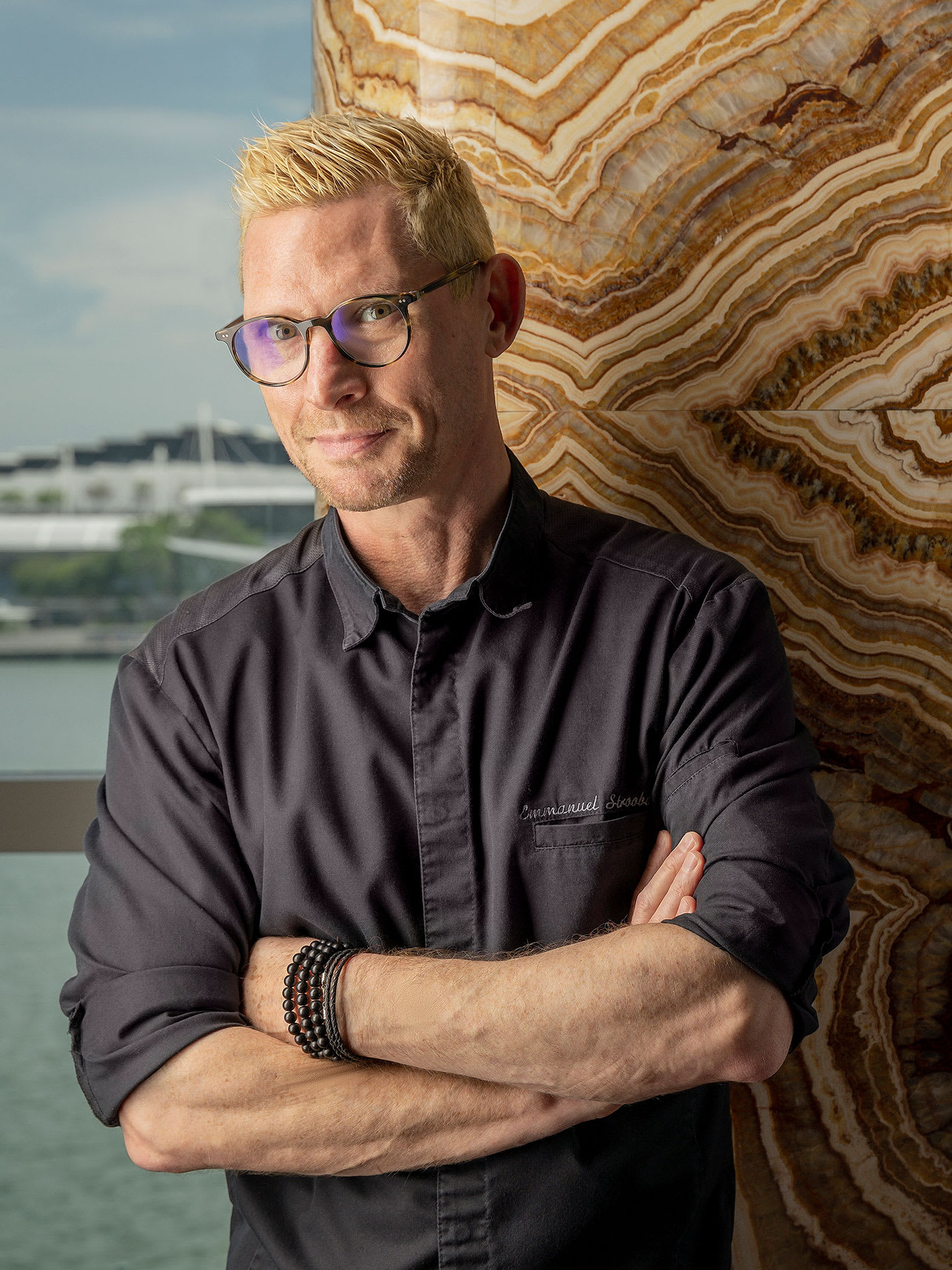
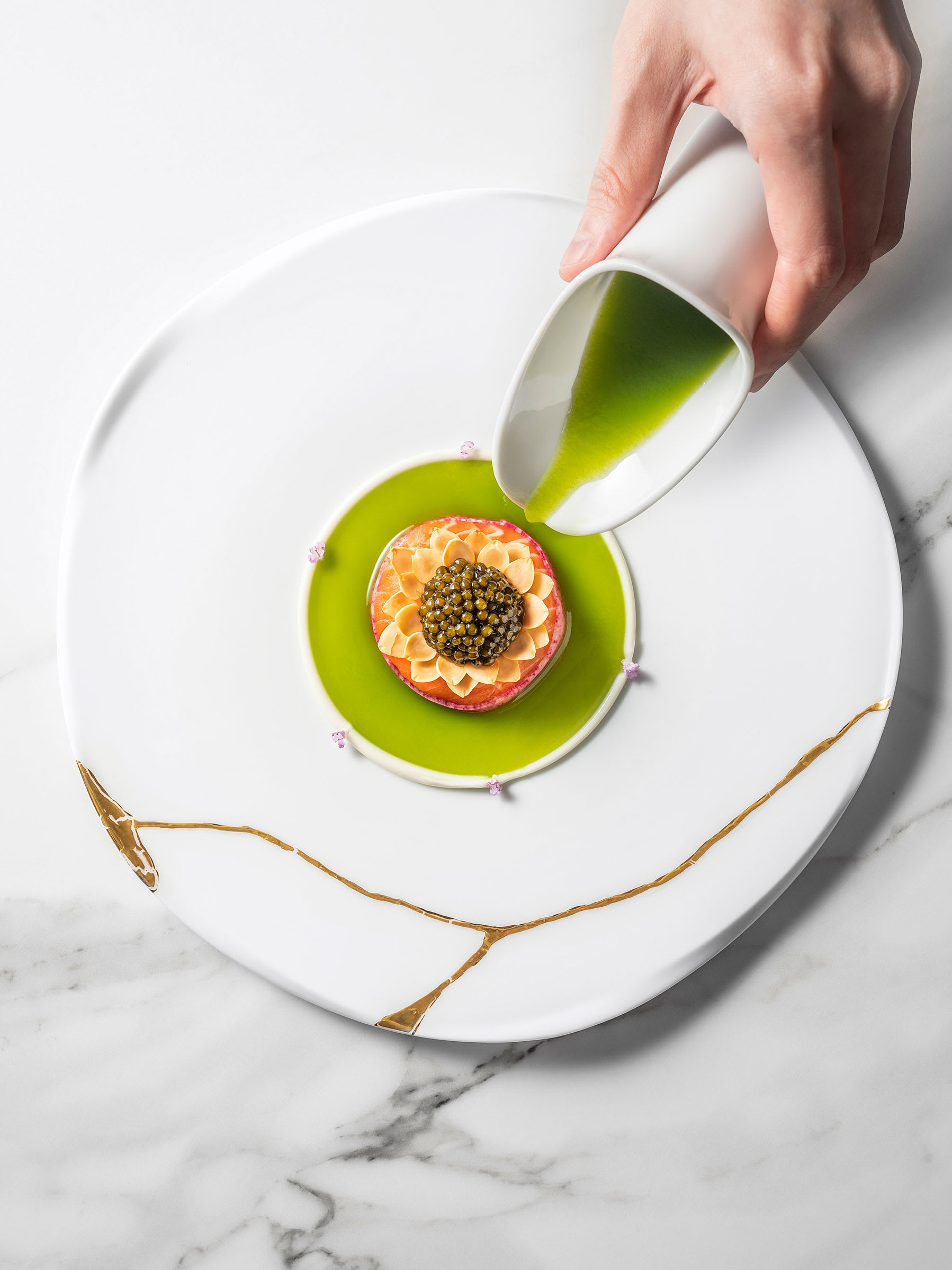
He is re-styling his restaurant menus into three themes: Regular (Opulence), vegetarian (Elegance) and caviar (Indulgence).
"At Saint Pierre, we take bang-up pride in procuring simply the finest seasonal ingredients from around the world. The introduction of our new menus allows the states to showcase the wonderful produce while allowing our guests to gain a deeper appreciation for some of the ofttimes-overlooked ingredients, especially in our vegetarian menu," he said.
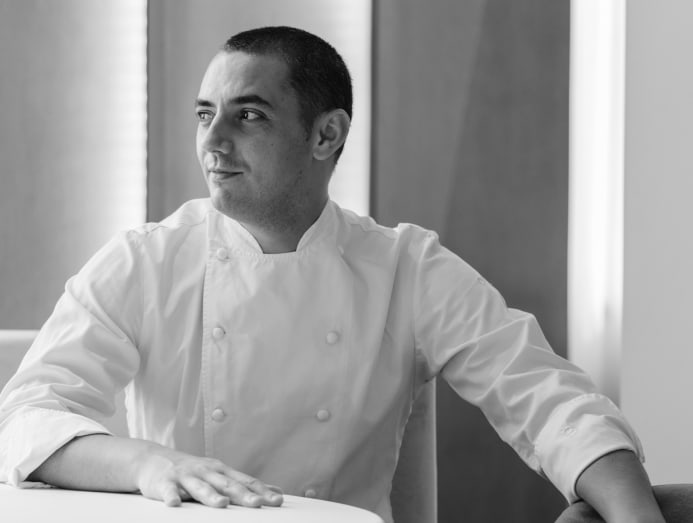
Meanwhile, Julien Royer, chef-owner of three-Michelin starred Odette, reckoned the desire to return to simpler joys and chasing authentic experiences will continue this twelvemonth.
His latest concept Claudine materialises this belief with a menu that pays tribute to his mother's recipes. "Guests want to come as they are, to relish proficient nutrient and greater company in a relaxed atmosphere, without compromising on precision and quality. It's in these simple pleasures where true luxury is found," he reiterated.
THE RISE OF THE Apprehensive VEGETABLE
While they proceed to craft memorable dining experiences on one paw, chefs are also struggling with supply chain and manpower challenges operationally.
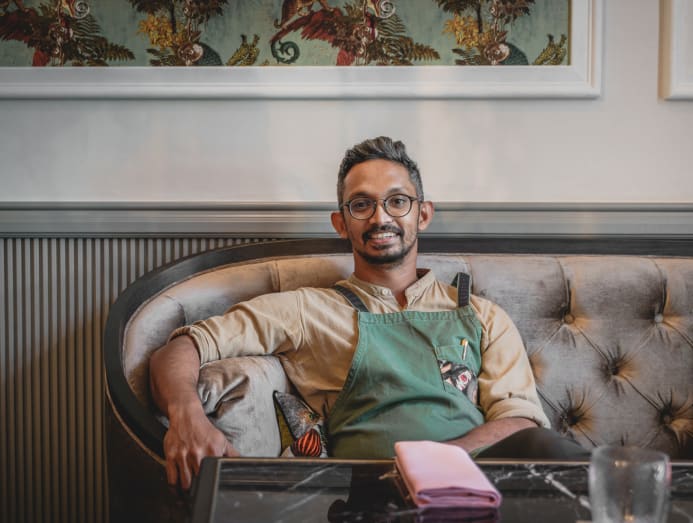
Rishi Naleendra, who helms one Michelin-starred Cloudstreet, too as Sri Lankan eatery Kotuwa and Fool wine bar, lamented the difficulties of finding and retaining staff who take a passion for food and hospitality. It has been, he said, "impossible" and one way he's working around this is to stick to a lean carte du jour format to retain quality, while creating a positive work environment.
" The pandemic has caused bully disruption to supply chains all over the world. Stocks are scarce and prices are skyrocketing," observed executive chef Daniele Sperindio of one Michelin-starred neo-Italian restaurant Art.
"In my opinion, such disruption will farther fuel the rising of the humble vegetable that we have seen in recent years, with more and more prominent chefs showcasing creative takes on vegetable-centred dishes that will both help to mitigate the increased toll of goods and to cater to the expanding flexitarian motility."
All the chefs agree that provenance will remain in the spotlight, with backyard ingredients starring alongside rare and seasonal gems on degustation menus.
At new gimmicky fine diner Marguerite at Gardens past the Bay for example, chef-owner Michael Wilson plays off the homely and the exotic in his seven-grade Chef's Menu.

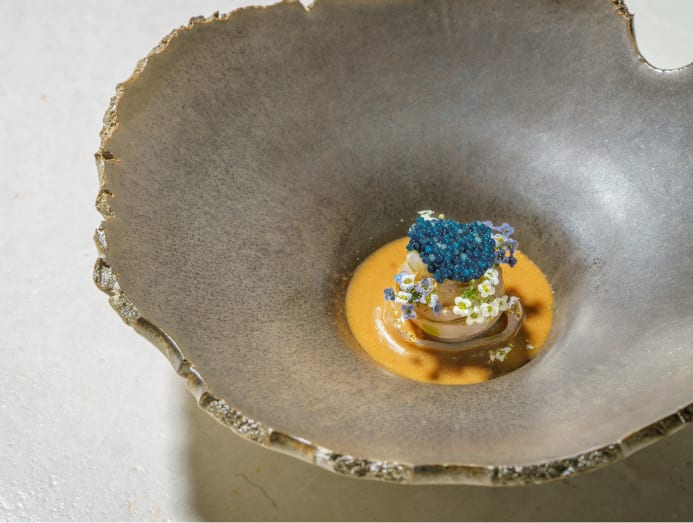
A plate of wearisome cooked French heirloom carrots, brightened by a sauce of sand carrots and Valencia oranges and served with yeast crisps, impresses with its fresh purity. So does an elegant "tagliolini" made of New Caledonian bluish prawn paste and topped with wild bluish scampi caviar from Australia, of which the eating house is the sole local purveyor.
The typically peasant staple polenta besides gets a Cinderella moment when served with chanterelles cooked in foie gras oil and chicken jus and showered with black truffle shavings.
WHAT'South IN OUR OWN BACKYARD
Locally grown produce comes to the fore, as well. One Michelin-starred Alma past Juan Amador recently partnered with Lawn Productions, which champions local farmers, to procure ingredients such every bit smoked and fresh fish, vegetables, grains and flowers.
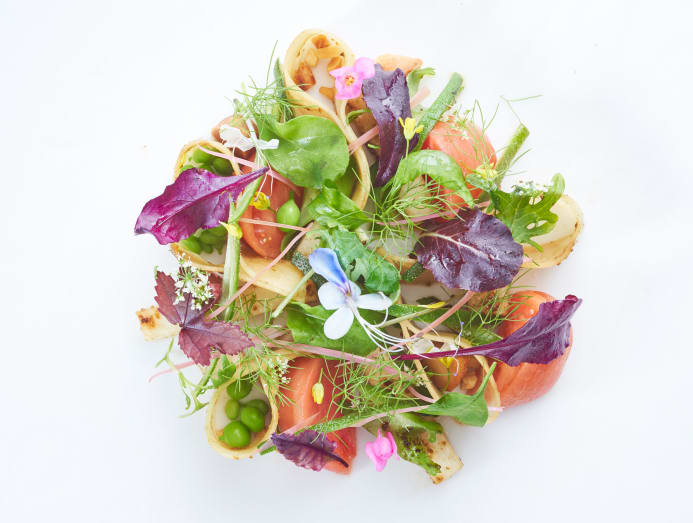
1 of its new dishes, aptly coded "121212" is a salad containing 12 types of grains, 12 herbs and 12 flowers.
The same tribute to locavore is presented in Odette's Promenade a Singapour (A walk into Singapore Garden), a plate of over 20 greens such as spring leaves, winged edible bean and jicama grown by local farmers with whom chef-owner Julien Royer has cultivated close relationships.
Herbs and flowers such as rosemary, pentas flowers and nasturtium from the rooftop aquaponics subcontract located betwixt Fairmont Singapore and Swissotel The Stamford will continue to garnish the plates of two Michelin-starred JAAN by Kirk Westaway.
"One of the anticipated trends would exist consumers choosing to take more fruits, vegetables and oceanic options, over a poly peptide-centric diet," said executive chef Kirk Westaway.

"At JAAN, we have always historic the apply of seasonal vegetables, fruits and ocean harvests and our guests can certainly be expecting more of these in the coming twelvemonth, elevated with innovative techniques to create exquisitely tasting and idea-provoking dishes. The flavours of such dishes should be light and make clean-tasting."
Fine art is doing the same with fruits. Sperindio shared: "Aside from the humble vegetable, we have been exploring fruits in a leading role, a frequently neglected star for savoury preparations. Every season we create one starter exclusively focused on a specific fruit, avoiding whatsoever dairy addition to retain purity and freshness."
Current starter Colazione nei Campi is a reinterpreted Italian memory of burnt comice pear; the upcoming tasting card will revolve effectually grapes.
NO TRAVEL? EMBRACE FUSION INSTEAD
With wanderlust all the same in the air, Tristin Farmer, executive chef of iii Michelin-starred Zen, believed that "fusion" cuisine volition get more pop, where "2 different cuisines, regions or styles come together and take inspiration from living in strange countries or from travel experiences".
Alma'southward executive chef Haikal Johari echoed a similar ascertainment, even every bit he has been incorporating Japanese and Thai influences in his Asian-European cuisine for the past half dozen years.

"Singaporeans love Japanese food. In terms of fine dining, there've been influences of Japanese products and flavours, a lot of dashi, kombu, and ageing of not just beef merely also fish for depth of season and umami."
New dishes at Alma include Japanese yam in a sauce made from Ensui uni (bounding main urchin kept in sea water to retain its natural taste) and scallop innards.
As growing need from the sophisticated dining set drives upward the prices of premium ingredients such as Oma bluefin tuna, nodoguro (blackthroat seaperch) and uni, it begs the sobering question of how sustainable our consumption patterns will be.
Chefs like two Michelin-starred Shoukouwa's head chef Kazumine Nishida advocated prudence while balancing "the satisfaction of preparing and serving the all-time possible ingredients" before these famed ingredients disappear birthday.
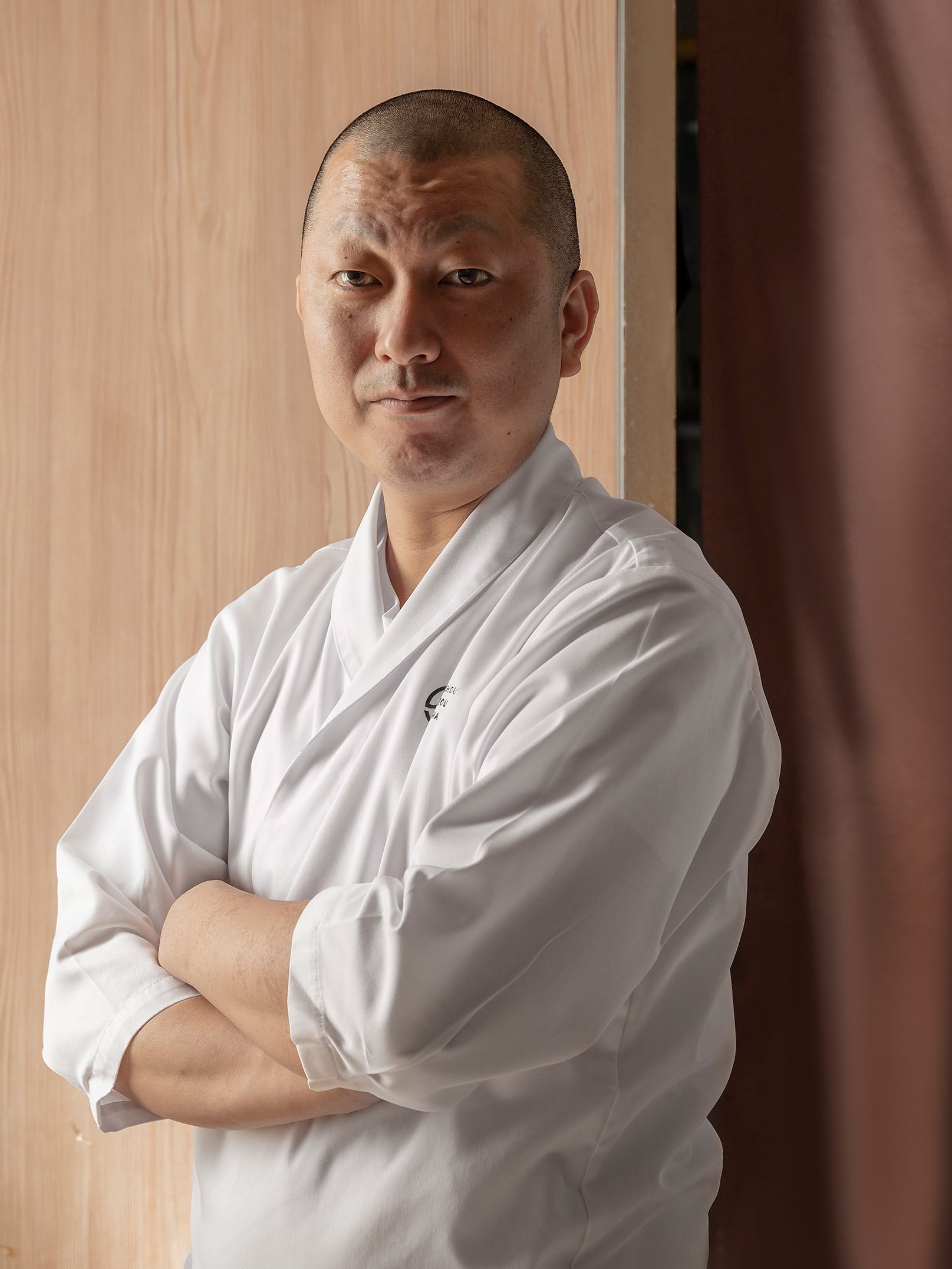
The restaurant sources more Echizen snow venereal from the Fukui prefecture than Matsuba snow crabs from the Tottori prefecture for the former's "slightly superior quality and the care with which they are handled downward the supply chain".
It is a tricky balance, said Nishida, equally practicality dictates that farmers and fishermen would focus on ingredients with high value and restaurant demand for a living. Yet he believed that "ultimately nosotros must practice moderation in the fishing, harvesting, and consumption of ingredients in order to address these problems."
So as we pursue the best dining experiences – and back up livelihoods in the process – information technology helps to recall that gourmet trends may alter, but mindful consumption will ensure that the best foods remain accessible and enjoyable for a long time.

Recent Searches
Trending Topics
holcombscrectinswer.blogspot.com
Source: https://cnalifestyle.channelnewsasia.com/experiences/singapore-fine-dining-trends-2022-restaurant-chefs-predictions-298936

Post a Comment for "Singapore’s top chefs predict the fine dining trends of 2022: From fusion to local veggies"